TV Isn't Appointment Viewing Anymore — It's a Vibe You Scroll Into
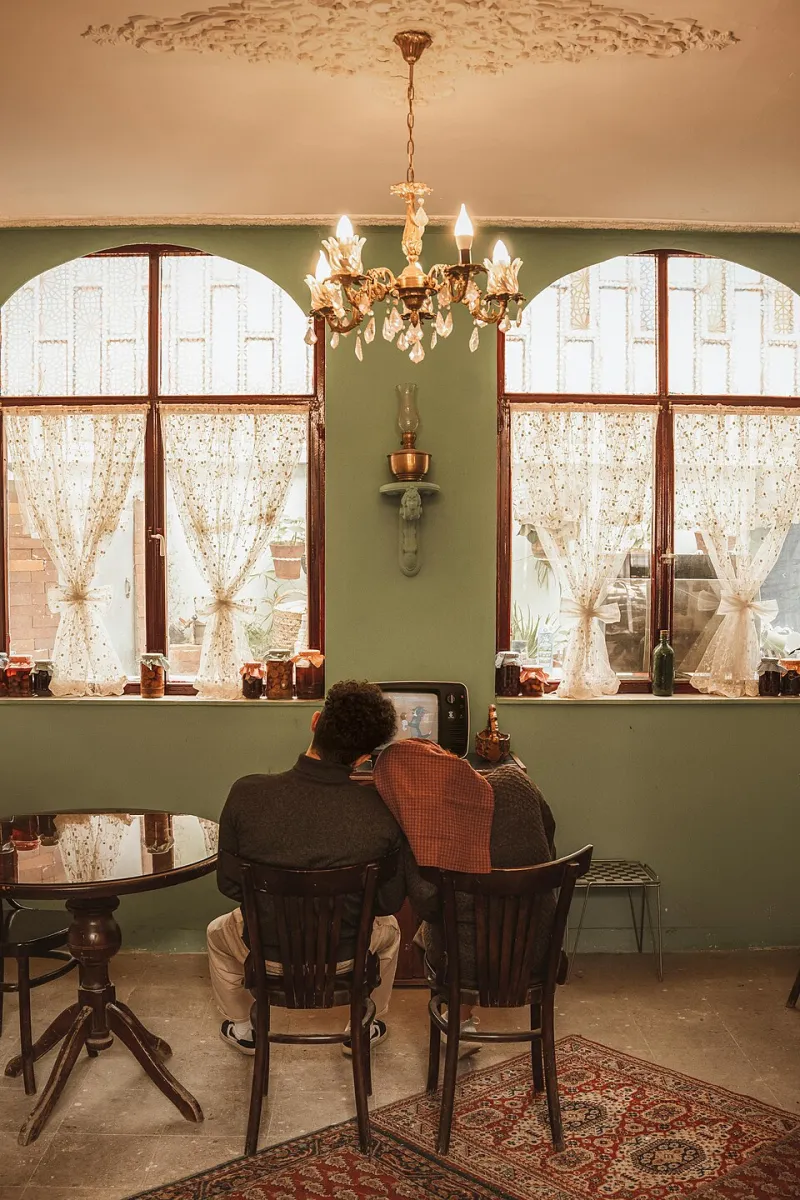
Photo: Voyefex11, CC0, via Wikimedia Commons
Remember when watching TV meant sitting down at a specific time, on a specific night, because that's when the show was on? Your parents probably remember it better than you do. That whole model — the appointment, the wait, the water cooler recap the next morning — is so thoroughly dead that it's almost hard to explain to anyone under 25 why it ever worked that way.
What's replaced it is weirder, more chaotic, and honestly kind of fascinating. In 2024, the path from "never heard of this show" to "currently on season three" can take about forty-five minutes and involve a TikTok clip, a Reddit thread, and a text from your group chat. That's not how television was supposed to work. And yet here we are.
The TikTok-to-Stream Pipeline Is Real and It's Running Everything
Let's talk about the new front door of television discovery, because it is absolutely not a streaming home screen anymore. It's a fifteen-second clip with 2.4 million views that catches you mid-scroll at 9pm on a Friday.
Platforms have started tracking this explicitly. Netflix, Hulu, and Max have all noted publicly that viral social moments — a scene that blows up on Twitter, a reaction video that spreads on TikTok, a meme format tied to a specific character — can spike viewership numbers for shows that were otherwise performing modestly. One well-timed clip can do what a marketing campaign couldn't.
This has flipped the traditional promotional playbook. Studios used to spend months building buzz before a premiere. Now they're watching social feeds post-launch and scrambling to amplify whatever organically catches fire. The audience is doing the marketing, and they're doing it for free, in real time, based entirely on what actually resonates — not what a trailer told them to care about.
For viewers, this means your watch list is increasingly curated by strangers on the internet rather than by critics or network schedules. Which is either democratizing or chaotic, depending on how you feel about algorithmic mob mentality.
Passive Scrolling Is a Viewing Mode Now
Here's something nobody really wants to admit but everyone does: a significant chunk of our "watching" isn't really watching. It's scrolling. It's having something on in the background while you're on your phone. It's starting an episode, getting distracted, rewinding three times, and eventually giving up and putting on something you've already seen.
Streaming platforms know this. They've designed for it. Autoplay exists specifically to keep something on your screen even when your attention has wandered. The "continue watching" row on every platform is engineered to reduce the friction of re-engagement. Even the thumbnail design — the way a show's image changes based on your viewing history — is optimized for the split-second glance of a distracted scroller.
This has created a new kind of viewer behavior that doesn't fit neatly into old measurement categories. Are you "watching" a show if you've had it on for six hours but couldn't tell someone what happened? Nielsen ratings were never built for this. The industry's traditional metrics — live viewers, household ratings, total impressions — are increasingly useless for capturing what's actually happening in American living rooms.
The Binge Is Evolving (And Not Always in the Direction You'd Expect)
For a while, the binge-drop model felt like the obvious future. Netflix popularized it, everyone copied it, and suddenly waiting a week for a new episode felt quaint and punishing. Why would you do that to yourself?
Except something weird happened: audiences started getting bored. When everything is available immediately, nothing feels like an event. The conversation around a show used to stretch out over weeks, building momentum as more people caught up. With a full-season dump, the discourse peaks in about four days and then evaporates. By the time your friend finishes the season, nobody wants to talk about it anymore.
So now platforms are experimenting again. HBO (and Max) stuck with the weekly episode model and watched shows like The Last of Us and Succession dominate cultural conversation for months. Disney+ has done the same. Even Netflix has started experimenting with splitting seasons into batches rather than releasing everything at once. The appointment is making a comeback — not because the technology demands it, but because the culture apparently needs it.
What "Success" Even Means Anymore
This is the part that's keeping network executives up at night. The old definition of a successful show was simple: lots of people watched it, at the same time, and advertisers paid accordingly. Clean, measurable, bankable.
Now? Success looks like a show with modest viewership numbers that has a wildly engaged fan community that drives merchandise sales, podcast listenership, and platform subscriptions. Or a show that nobody watched live but that gets rediscovered every six months when a new season of something else drops and someone on Twitter recommends it as a palate cleanser. Or a show that technically got canceled but whose fandom kept it alive long enough for a streaming service to revive it three years later.
None of these outcomes fit the old model. But all of them represent real cultural impact. The entertainment industry is slowly, painfully building new frameworks for measuring that impact — and in the meantime, a lot of genuinely good content is getting written off because it doesn't spike in the first 72 hours.
The Vibe Economy of TV
Maybe the most honest way to describe how TV works in 2024 is this: it's vibes-based. You don't pick a show because a critic gave it four stars or because it's nominated for awards. You pick it because the energy of it — the aesthetic, the tone, the specific emotional frequency — matches where you are right now.
That's why "comfort rewatching" has become such a massive behavior. People aren't rewatching The Office or New Girl because they forgot what happened. They're rewatching because those shows have a specific emotional texture that feels like a weighted blanket. The content is almost secondary to the experience.
And that shift — from content-as-information to content-as-atmosphere — is the biggest change in how we watch TV, and probably the one the industry is least equipped to monetize. How do you sell a vibe? How do you measure it?
Somebody's working on an algorithm for that. Probably.