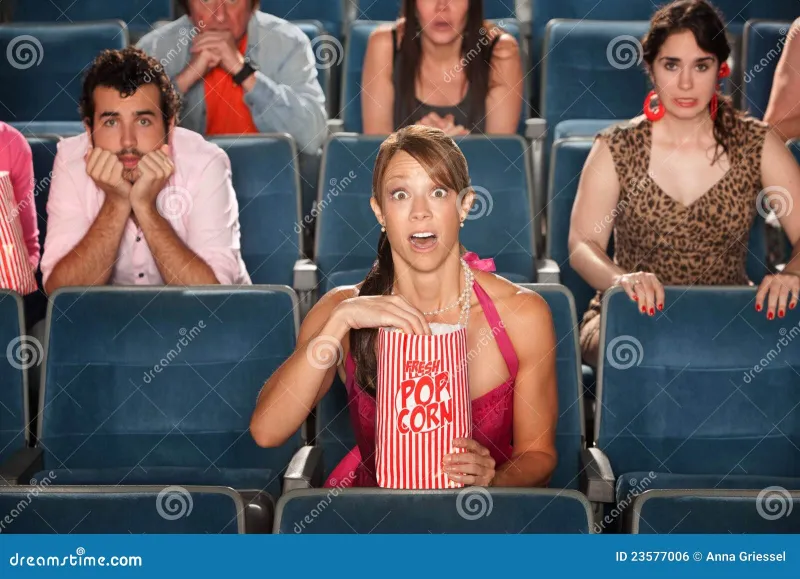
You're Watching Five Things Right Now and You Know It

Photo: Modern-Day Debate, CC BY 3.0, via Wikimedia Commons
Be honest. Right now, as you're reading this, there's probably something else going on. Maybe Netflix is running in the background. Maybe your phone just buzzed with a TikTok notification you're going to check in about thirty seconds. Maybe you've got a Spotify playlist going, or a YouTube video paused mid-way, or a Discord server silently stacking up messages.
That's not distraction anymore. That's just Tuesday.
Welcome to what some media researchers are calling omnistream entertainment — the era where content isn't consumed in a single, focused sitting, but in a constant, overlapping flood from every screen you own. It's everywhere, all the time, and honestly? The entertainment industry is still scrambling to catch up with what you're already doing naturally.
The Multi-Screen Reality Nobody Wants to Admit
Here's a number that should stop you cold: according to Nielsen's 2023 Total Audience Report, American adults spend over 10 hours a day interacting with some form of media. Ten hours. That's more than most people sleep and work combined — and the reason that's even mathematically possible is because a massive chunk of that time involves using multiple platforms at once.
Streaming a show while scrolling Instagram? That counts as time spent on both. Playing a mobile game during a Twitch stream? Double-logged. The concept of "watching TV" has quietly evolved into something way more layered, and media companies are only now starting to measure it honestly.
The phenomenon isn't new, exactly. People have had the TV on in the background since the 1970s. But the density of simultaneous consumption has exploded. Your couch used to compete with one screen. Now it competes with five.
Why Our Brains Actually Like It This Way
This might feel like a modern failure of attention, but psychologists have a more nuanced take. Dr. Gloria Mark, a professor at UC Irvine who studies digital distraction, has noted that constant task-switching — while not great for deep work — actually satisfies a very real human need for novelty and stimulation. Our brains are wired to seek new information. Entertainment platforms, built entirely around that impulse, have essentially created an all-you-can-eat buffet for that craving.
There's also a social layer to it. Watching a show while simultaneously seeing Twitter (now X) explode with reactions to it creates a kind of communal viewing experience that solo, focused watching never provided. The second screen enhances the first screen, at least emotionally. You're not just watching the finale — you're watching the finale with the internet.
And then there's comfort-watching: the habit of putting on familiar shows (think The Office, Friends, endless HGTV) not to actually watch them, but as ambient sound and light. For millions of Americans, streaming has become wallpaper. That's not apathy — it's a genuine psychological function, like having background noise while you work.
What Platforms Are Doing to Fight (and Lean Into) the Chaos
Every major entertainment company is grappling with the same problem: if your audience is technically "watching" your content while also doing four other things, how do you hold any meaningful share of their attention?
The answers have been pretty varied — and some of them are genuinely clever.
Netflix has leaned hard into auto-play and algorithm-driven queues designed to reduce the friction between one piece of content and the next. The goal isn't to make you choose what to watch next. It's to make sure you never have to. Keep the stream flowing and you keep the attention, even if it's partial.
YouTube has gone all-in on Shorts, understanding that if you're going to compete with TikTok for the second-screen slot, you need content that delivers a hit in under 60 seconds. Their longer video format still dominates for background listening — YouTube is arguably the biggest podcast platform in America right now, even if nobody frames it that way.
Spotify quietly expanded into video podcasts and is investing heavily in making its app a destination, not just a player. They understand that audio has a unique advantage in the multi-stream world: it doesn't require your eyes.
Gaming platforms like Xbox and PlayStation have started integrating social features, streaming hooks, and content creator tools directly into their dashboards. The idea is that gaming time shouldn't be isolated from the rest of your entertainment ecosystem — it should feed into it.
And then there's social media, which has essentially declared itself an entertainment platform outright. TikTok, Instagram Reels, and YouTube Shorts aren't social in the old Facebook sense — they're short-form TV channels that happen to run on your phone.
The Attention Economy Gets More Crowded Every Year
Here's the uncomfortable truth underneath all of this: there are only 24 hours in a day, and the number of platforms competing for slices of those hours just keeps growing. The attention economy — the idea that human attention is a finite, monetizable resource — is getting more competitive, not less.
For entertainment companies, the math is brutal. Getting someone to subscribe to your platform is no longer enough. You need them to actively engage with your content, not just have it running while they scroll someone else's app. Engagement metrics, not subscriber counts, have become the real currency.
That's why you're seeing such a push toward event content — the kind of show or moment that demands your full attention because everyone's talking about it right now and you'll be lost if you're only half-watching. Think The Last of Us, the Succession finale, or any given episode of The Bear. These shows are engineered, at some level, to pull you out of the multi-stream fog and make you actually watch.
What This Means for You, the Audience
Nobody's here to lecture you about screen time. At V7081, we cover entertainment like it actually exists in the real world — messy, overlapping, and constant. The truth is, omnistream consumption isn't going away. If anything, it's going to get more sophisticated as AI recommendation engines get better at predicting exactly which combination of content will keep you engaged across every screen you own.
The more interesting question isn't whether you should be watching five things at once. It's whether the things you're watching are actually worth your attention — even the fraction of it you're giving them.
Because here's the thing: everything is everywhere, all the time. But not all of it deserves to be.