Too Many Shows, Zero Decisions: The Streaming Trap Nobody Talks About

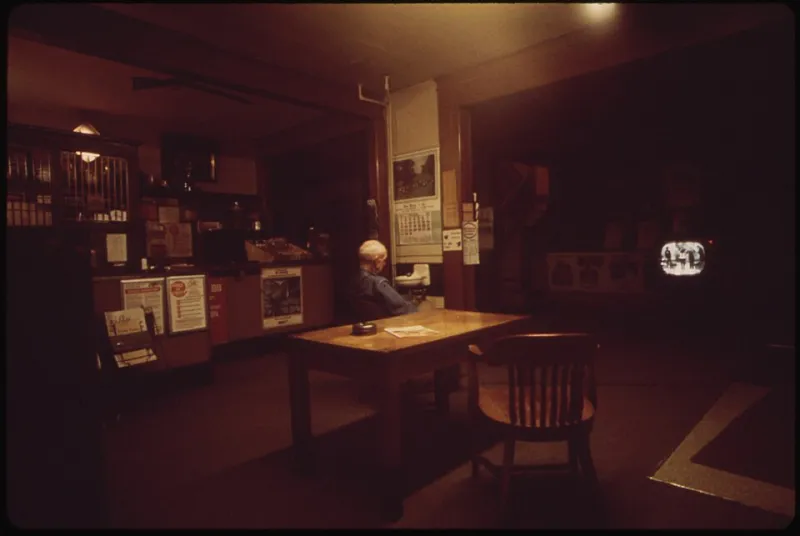
Photo: Erik Pevernagie, CC BY-SA 3.0, via Wikimedia Commons
Picture this: It's Friday night. You've been grinding all week and you've finally earned the right to just sit down and watch something. You open your streaming app of choice — or maybe all five of them in rotating tabs — and then... nothing. Forty-five minutes later, you're still scrolling, vaguely annoyed, and somehow more tired than when you started. You might end up rewatching an episode of The Office you've seen eleven times. Again.
This isn't a personal failure. It's a psychological phenomenon that researchers have been tracking for decades, and streaming platforms have basically turbocharged it into an everyday experience.
The More You Have, The Less You Want
Back in 2000, psychologists Sheena Iyengar and Mark Lepper ran a now-famous study at a California grocery store. They set up a jam-tasting table — sometimes with 6 options, sometimes with 24. The big display drew more attention, sure. But customers who saw the smaller selection were ten times more likely to actually buy something.
Ten times. Over jam.
Now scale that up to a catalog of 5,000 TV shows and movies, refreshed monthly, spread across half a dozen competing platforms. The math doesn't get better. Barry Schwartz, who literally wrote the book on this (it's called The Paradox of Choice), argues that too many options don't just overwhelm us — they make us feel worse about whatever we eventually pick. You start second-guessing yourself before you've even pressed play. What if something better is two scrolls away?
Your Brain Is Doing Something Annoying Right Now
Here's the thing about decision fatigue: it's cumulative. By Friday evening, most people have already made hundreds of tiny decisions throughout the day — what to eat, what to wear, what to reply to that work email. The mental energy required to evaluate options is genuinely finite, and entertainment choices, as trivial as they seem, still draw from that same well.
Streaming platforms are designed with this in mind, but not in a way that helps you. Autoplay previews, endless rows of thumbnails, "because you watched" carousels — all of it is engineered to keep you engaged with the platform, not necessarily to get you watching something satisfying. There's a meaningful difference between those two things, and the apps are optimized for the former.
Researchers at Netflix actually published internal data a few years back suggesting that users who don't find something to watch within 60 to 90 seconds are significantly more likely to close the app entirely. So the platform's solution? More content, more rows, more suggestions. Which, paradoxically, makes the problem worse for a lot of people.
The "Good Enough" Standard Has Left the Chat
There's another layer to this that doesn't get talked about enough: maximizing versus satisficing. A "satisficer" (yes, that's a real term) picks something that's good enough and rolls with it. A "maximizer" needs to find the best possible option before committing. Streaming culture, with its infinite scroll and endless "top 10" lists, has quietly pushed a lot of us toward maximizing behavior — even people who were perfectly happy satisficers before.
When there were three channels and a TV Guide, you watched what was on. Was it always great? No. But the decision was made for you, and there was a weird kind of freedom in that. Now, the burden of choice sits entirely on your shoulders, and the implicit promise of every streaming platform — the perfect show is in here somewhere — makes it nearly impossible to settle comfortably into anything less than that.
So you keep scrolling. Just in case.
Why You Keep Rewatching the Same Stuff
This explains something a lot of people feel vaguely embarrassed about: the comfort rewatch. When the decision paralysis gets bad enough, a huge chunk of viewers just retreat to something familiar. Friends, Parks and Rec, Breaking Bad for the fourth time. It's not laziness or lack of imagination — it's your brain opting out of an exhausting evaluation process.
Familiarity removes the risk. You already know you like it. There's no chance of committing 45 minutes to something that turns out to be a disappointment. In a media landscape where every new release comes with the silent pressure of "is this worth my limited time," going back to the known quantity is genuinely rational.
Streaming platforms have caught on to this, which is why legacy content catalogs are treated as valuable assets. Your rewatches are data points too.
The Platform Arms Race Made This Worse
It's worth noting that the content explosion wasn't inevitable — it was a business strategy. When Netflix started producing originals and competitors scrambled to keep up, the volume of available content skyrocketed. Between 2010 and 2022, the number of scripted TV series available in the US more than tripled. That's not accounting for reality TV, documentaries, international imports, or the YouTube rabbit holes that technically count as "content" too.
Every platform needs you to believe it has something the others don't. So they commission more, license more, and surface more — creating a landscape where the sheer quantity becomes its own kind of noise. The signal-to-noise ratio drops, decision paralysis increases, and the average American ends up spending a genuinely embarrassing amount of time just looking at entertainment rather than consuming it.
Some studies have clocked the average browsing-before-watching session at over 18 minutes. That's nearly a full episode of a sitcom spent deciding whether to watch a sitcom.
So What Do You Actually Do About It?
Honestly? The platforms aren't going to fix this for you — it's not in their interest to make choosing easier if easier choosing means you spend less time in the app. A few things that actually work:
Set a timer. Give yourself five minutes to pick something, and commit to whatever you land on. The first ten minutes of almost anything are survivable, and you might surprise yourself.
Use a third-party rec source. Ask a friend, check a single trusted review outlet, or use a site that curates rather than catalogs. Outsourcing the decision removes the paradox.
Embrace the rewatch without guilt. There's nothing wrong with it. Comfort content exists for a reason, and not every viewing session needs to be a cultural event.
Rotate platforms instead of stacking them. If you're paying for six services simultaneously, you're also giving yourself six times the options to drown in. One or two at a time is genuinely more enjoyable for a lot of people.
The dirty secret of the streaming era is that more isn't always more. Sometimes it's just more scrolling, more second-guessing, and more Friday nights that evaporate without you watching a single thing. The paradox is real, it's well-documented, and the platforms profiting off your indecision aren't exactly rushing to solve it.
But at least now you know why you spent 40 minutes staring at thumbnails before giving up and going to bed. Progress, kind of.