Scroll, Click, Repeat: The Science Behind Why Your Streaming App Feels Like a Slot Machine
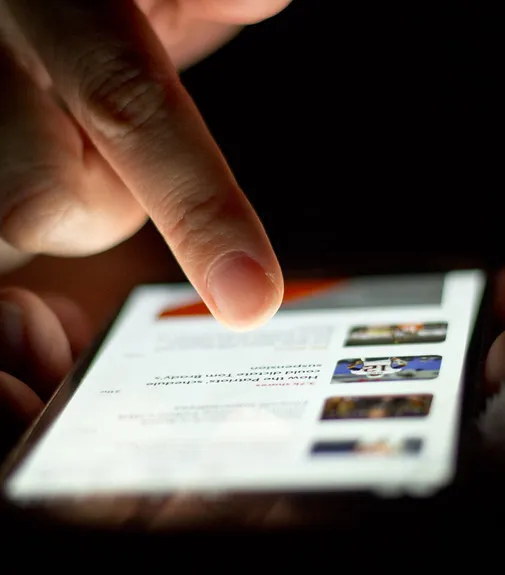
Photo: Japanexperterna.se, CC BY-SA 2.0, via Wikimedia Commons
You open Netflix to watch one episode. Ninety minutes later, you're three episodes deep into a show you don't even remember selecting, and your phone is face-down somewhere under a throw pillow. Sound familiar? That's not a coincidence. It's architecture.
Entertainment platforms in 2024 aren't just in the content business — they're in the neurochemistry business. And they're very, very good at it.
Your Brain on a Scroll
Here's the basic deal: dopamine is the neurotransmitter your brain releases in anticipation of a reward. Not during the reward — before it. That distinction matters more than most people realize. Dopamine is the "what comes next" chemical, which is exactly why a perfectly engineered feed of thumbnails, previews, and autoplay countdowns is basically a dopamine delivery system dressed up as a TV guide.
Dr. Anna Lembke, a psychiatrist at Stanford and author of Dopamine Nation, has talked extensively about how digital platforms exploit this mechanism. The unpredictability of what you'll find when you scroll — will the next thumbnail be boring or irresistible? — creates what behavioral scientists call a "variable reward schedule." It's the same psychological loop that makes slot machines so hard to walk away from. You don't win every time, but you might win the next time. And that "might" is doing a lot of heavy lifting.
Netflix, TikTok, YouTube — they've all essentially built slot machines with better graphic design.
Infinite Scroll Didn't Happen by Accident
Aza Raskin, the designer who invented infinite scroll, famously said he regrets creating it. That's a pretty telling confession. Before infinite scroll, content had natural stopping points — page breaks, load times, the physical act of clicking "next." Those friction moments were tiny, but they were enough to let your prefrontal cortex check in. Do I actually want more of this?
Infinite scroll eliminated that pause entirely. The content just... keeps coming. There's no bottom. No moment of natural rest where your brain gets to ask whether you're still having fun.
TikTok turbocharged this with short-form video, essentially turning the scroll into a content firehose. Every swipe is a micro-gamble. The app's algorithm — which is genuinely one of the most sophisticated recommendation engines ever built — learns your hesitation patterns, your rewatch behavior, even how long you linger on a video before swiping away. It knows what you want before you do. Sometimes before you even know you want it.
The Autoplay Trap
Autoplay is the quieter villain in this story. Netflix introduced it, everyone else copied it, and now the default assumption is that you want to keep watching unless you actively opt out. That's a subtle but significant psychological flip. The burden is on you to stop, rather than on you to choose to continue.
Cognitive psychologists call this "default bias" — humans have a strong tendency to stick with whatever option requires the least effort. Platforms know this. They set the default to "more" and let human laziness do the rest. The autoplay countdown timer — that little circle ticking down to the next episode — is essentially a pressure clock. It creates mild anxiety that makes stopping feel like an active, effortful choice. Continuing feels like doing nothing. And doing nothing is always easier.
Add in the fact that episode endings are deliberately engineered to be unresolved — cliffhangers, unanswered questions, mid-scene cuts — and you've got a system that's practically begging your brain to keep going.
Notifications: The Digital Tap on the Shoulder
Push notifications are a whole separate layer of this. Every "New episode of [show you watched once] is available!" ping is a deliberate interruption designed to pull you back into the platform's gravity. Platforms A/B test notification language, timing, and frequency with obsessive precision. They know that a notification sent at 8:47 PM on a Thursday performs differently than one sent at 10:15 PM on a Sunday. They know which words trigger opens and which ones get ignored.
The notification isn't just informational — it's an invitation to re-enter the reward loop. And because your phone is already in your hand (it's always in your hand), the barrier to accepting that invitation is basically zero.
Are You Actually Enjoying This?
Here's the uncomfortable question that sits underneath all of this: when you're three episodes into a show at midnight, are you enjoying it? Or are you just chasing the next hit?
Those two things can feel identical in the moment. The brain doesn't always distinguish between genuine pleasure and compulsive stimulus-seeking. But there are some tells. If you finish a session feeling vaguely hollow, slightly guilty, or unable to recall much of what you watched — that's a sign you may have been running the reward loop more than actually engaging with the content.
This isn't a moral judgment. It's just neuroscience. Entertainment platforms are built by some of the smartest engineers and behavioral scientists in the world, and their entire professional mission is to maximize your time on platform. You are, in a very real sense, playing against a stacked deck.
So What Do You Actually Do About It?
The good news: awareness helps. Knowing the mechanism doesn't make you immune to it, but it does give you a fighting chance. A few things that actually work:
- Set a friction point intentionally. Turn off autoplay. Make yourself actively choose the next episode. That five-second pause is your prefrontal cortex getting a word in.
- Watch with intention. Decide what you're watching before you open the app, not after you're already in the scroll. This sounds simple because it is, and it works.
- Notice the hollow feeling. If you consistently feel worse after a session than you did going in, that's data. Pay attention to it.
- Use the notification settings. Turning off entertainment app notifications isn't deprivation — it's just not letting a billion-dollar algorithm schedule your evenings for you.
None of this means you need to quit streaming or feel bad about watching TV. Entertainment is genuinely one of life's great pleasures, and there's nothing wrong with binge-watching a show you love. The difference is in who's driving — you, or the algorithm.
Right now, for a lot of us, it's the algorithm. And it's been driving for a while.