Streaming Bankruptcy Is Real and People Are Filing for It Every Single Day
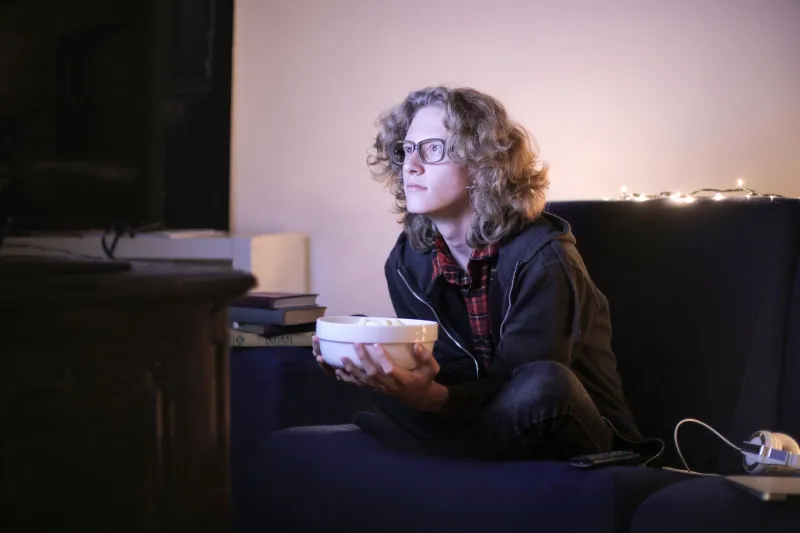
There's a specific kind of dread that hits when you open your streaming app and the watchlist just... keeps scrolling. Past the prestige drama you added in 2021. Past the foreign film your coworker swore would change your life. Past the three different cooking competition shows you bookmarked during a very specific Thursday night mood. At some point, the list stops being a plan and starts being a debt.
And now, in living rooms and Twitter threads and Reddit confessionals across the country, people are doing something radical: they're admitting they can't pay it back. They're calling it streaming bankruptcy. And they're filing with zero shame.
The Debt You Never Meant to Accumulate
Watching debt is exactly what it sounds like. It's the psychological weight of content you've committed to consuming but haven't — and probably won't. Every saved title is a tiny promise you made to yourself, and every time you scroll past it to watch something new, that promise gets a little louder.
The thing is, the platforms are built for this. Every algorithm nudge, every "because you watched" suggestion, every autoplay teaser is engineered to get you to add more. There's no friction in saving something. One tap and it's yours — except it's not, really. It just lives in a list that grows faster than you can watch.
Psychologists have a term adjacent to this: the Zeigarnik effect. Unfinished tasks create mental tension. Your brain keeps a running tab of incomplete things, which is fine when it's a work project but genuinely exhausting when it's 200 episodes of television you voluntarily signed up for.
The People Who Actually Nuked Their Queues
Talk to anyone who's gone through a full watchlist purge and they describe it the same way: relief. Not just a little relief — the kind of relief that makes you want to text people about it.
One person put it plainly in a Reddit thread that racked up thousands of upvotes: "I deleted everything. Started completely fresh. It felt like cleaning out a closet I'd been avoiding for two years. I slept better that night."
Another described the moment she realized her queue had become an obligation rather than a pleasure. "I was dreading opening Netflix. Not because there was nothing on — because there was too much I was supposed to watch. The second I deleted it all, I actually wanted to watch something again."
This isn't a niche phenomenon. Across social platforms, the phrase "streaming bankruptcy" has become shorthand for a very specific kind of digital exhaustion. People aren't just clearing lists — they're publicly announcing it. There's something almost confessional about the posts. A declaration. I had too much. I let it go. I'm starting over.
FOMO Had a Great Run. JOMO Is Taking Over.
For a solid decade, FOMO — the Fear of Missing Out — was basically the operating system of modern entertainment consumption. You watched Game of Thrones because everyone was watching it. You added Succession before you were ready because the conversation was already happening without you. Content wasn't just entertainment; it was social currency, and your queue was your investment portfolio.
But something shifted. Maybe it was the sheer volume — there are now more scripted TV shows produced in a single year than a person could watch in a lifetime of dedicated viewing. Maybe it was the pandemic era, when everyone had "all the time in the world" to catch up and still couldn't. Maybe it's just that people got tired.
Whatever the cause, JOMO — the Joy of Missing Out — is having a genuine cultural moment. And entertainment is one of the clearest places you can see it playing out. People are opting out of the cultural conversation about shows they haven't seen and don't plan to watch. They're watching less, enjoying it more, and feeling surprisingly fine about the gap.
The shift is less about cynicism and more about recalibration. Less "I refuse to engage" and more "I'm only engaging with what actually sounds good to me right now."
Why Infinite Choice Stopped Feeling Like Freedom
Here's the paradox at the center of all of this: more options were supposed to make everything better. More platforms, more genres, more original content, more everything — that was the promise. And for a while, it felt true.
But choice overload is a documented psychological phenomenon. When you have too many options, decision fatigue kicks in and the whole thing stops feeling like abundance. It starts feeling like work. Research consistently shows that people are less satisfied with choices made from large sets than from small ones, even when the large set technically contains better options.
Streaming platforms essentially handed us every possible entertainment choice and said "go." And we did, for years. We added, saved, bookmarked, and queued with the enthusiasm of someone who genuinely believed they'd get to all of it. Eventually, a lot of us looked up and realized we were exhausted and we hadn't even started watching.
The watchlist purge is, in some ways, a correction. A return to the simpler model of deciding what you want tonight without the ghost of 300 other titles judging you for it.
What Comes After the Reset
Interestingly, most people who go through a full streaming bankruptcy don't come out the other side as non-watchers. They come out as better watchers — more intentional, more present, more likely to actually finish something they start.
The empty queue is a permission slip. It says: you don't owe this app anything. You're allowed to pick something because it sounds good right now, not because you promised yourself you'd get to it eventually.
There's also a growing subset of people who are taking it a step further — not just clearing the queue but reconsidering the subscriptions themselves. If you're paying for three platforms and only actively watching one, the math eventually becomes impossible to ignore. Streaming bankruptcy and subscription pruning are increasingly happening in tandem, a kind of full digital declutter that feels very much in step with a broader cultural appetite for simplification.
Everything, everywhere, all the time was the pitch. Turns out, a lot of people want something more like something good, somewhere, when I'm in the mood. That's a harder algorithm to build. But it's a much easier life to live.
The list will always be there. The question is whether it's serving you or haunting you. And more people than ever are choosing to find out what happens when they just let it go.