When the Credits Roll for Good: The Emotional Hangover of Finishing a Show

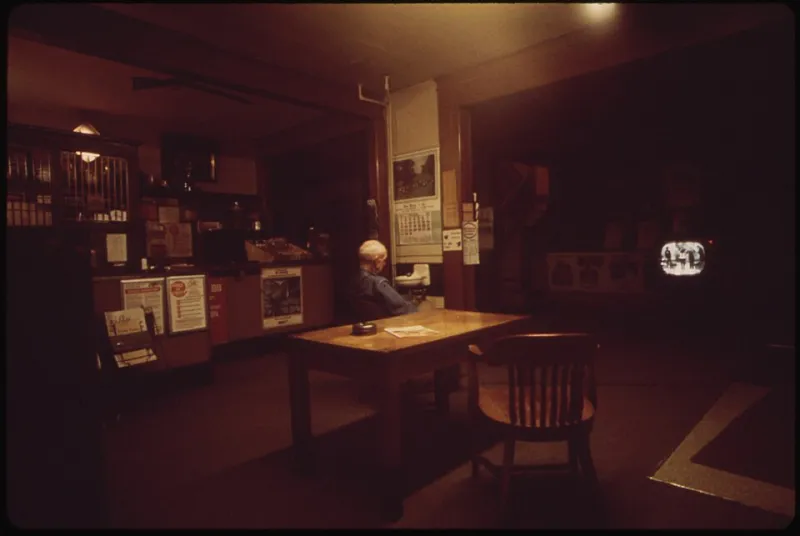
Photo: Semowe, CC0, via Wikimedia Commons
You know the feeling. The finale ends. The screen goes dark. You sit there for a minute — maybe longer — staring at the autoplay countdown like it personally wronged you. And then it hits: that's it. That world is closed now. Those people aren't going anywhere new. It's over, and somehow you feel genuinely sad about a thing that was never real to begin with.
Welcome to the Great Unwatching. It's happening everywhere, all the time, and almost nobody talks about it like the actual emotional event it is.
It's Not Just a Show. It Never Was.
Here's the thing about binge culture that the streaming platforms don't exactly advertise: when you spend 40, 60, 80 hours with the same characters — watching them fail, grow, fall in love, fall apart — your brain doesn't process that as passive entertainment. It processes it as a relationship. Neuroscientists call it parasocial connection, but honestly that term undersells it. You weren't just watching these people. You were with them, usually alone, usually late at night, in a way that felt oddly intimate.
That's the quiet genius (and occasional cruelty) of modern streaming design. Unlike the old weekly TV model where you had seven days to emotionally decompress between episodes, binging collapses time. You're absorbing years of a character's life in a matter of days. The attachment accelerates. And so does the loss when it ends.
The Cliffhanger Industrial Complex
Of course, not every show gets the courtesy of a proper ending. And this is where the streaming era has introduced a specific kind of emotional chaos that previous generations of TV viewers never had to deal with at quite this scale.
Cancellations happen fast now. A show gets one season, builds a devoted audience, ends on a massive cliffhanger — and then the renewal announcement never comes. The story just... stops. No resolution. No closure. Just a frozen moment in someone's fictional life that will never move forward.
Ask anyone who watched The OA on Netflix. Or Mindhunter. Or I Am Not Okay with This. These weren't fringe shows with tiny audiences. People were genuinely invested — and then got left holding storylines that will never be resolved. It's like starting a really great conversation with someone and having them just walk out mid-sentence and never come back.
Streaming platforms have essentially industrialized the cliffhanger. It drives engagement, keeps subscribers from canceling, generates social buzz. But the cost is an audience that has learned, slowly and painfully, not to fully trust that any story will get to finish.
Learning to Grieve Before the End
Something interesting has started happening in fan communities as a result. People are beginning to emotionally prepare for loss before a series finale even airs. There's a kind of preemptive grief that shows up in Reddit threads and fan forums — people saying goodbye to characters and storylines while the show is still technically running, just in case.
It's a defense mechanism, and it makes total sense. If you know the rug might get pulled, you start loosening your grip before anyone yanks it. You love the show a little harder in the moment precisely because you understand it might be all you get.
This has quietly changed how people watch, not just how they feel at the end. There's more presence now, more appreciation for individual episodes rather than just racing toward resolution. In a weird way, the cancellation anxiety has made some viewers better at actually enjoying what's in front of them — even if it comes with a constant low hum of dread.
When a Good Finale Hits Like a Gut Punch
Then there are the shows that do stick the landing. And honestly? Those can hurt just as much, in a completely different way.
A genuinely great finale — the kind that honors everything the show built, gives characters real conclusions, and somehow manages to feel both surprising and inevitable — is a rare thing. When it happens, the ending doesn't just close a story. It closes a version of yourself that existed while you were watching it. The person who stayed up until 2 a.m. to see what happened next. The person who texted their friend a string of reaction emojis at the exact moment a plot twist landed. That era of your life is done too, and the show's ending marks it.
Breaking Bad. The Americans. Fleabag. Schitt's Creek. Shows like these left audiences not just satisfied but genuinely moved in a way that's hard to articulate without sounding dramatic. Because it is a little dramatic — and that's okay. You spent real time there. You're allowed to feel something when it's gone.
The Hollow Ending Problem
On the flip side, a bad finale can retroactively poison the whole experience. This is a phenomenon that social media has amplified to a truly unhinged degree. The Game of Thrones final season remains one of the most documented examples of audience betrayal in television history — a show that had been a cultural juggernaut for nearly a decade, ending in a way that felt so disconnected from what came before that fans didn't just feel disappointed. They felt cheated.
And that reaction makes sense when you think about the investment involved. If a show runs for eight years, audiences have spent years building emotional equity in it. A bad ending isn't just a bad episode — it's a retroactive rewrite of the entire relationship. Suddenly all those hours feel different. The grief isn't just for the show being over. It's for the version of the show you thought you were watching.
Moving On, Eventually
So what do you do with all of this? How do you process the end of a fictional world that genuinely mattered to you?
Honestly, the same way you process anything: you let it sit for a minute. You talk about it with people who get it. You maybe rewatch a favorite episode later, when the raw feeling has faded into something more like nostalgia. And then, eventually, you find another show — because that's how this works, and you know it, and that's fine.
The Great Unwatching is just part of the deal now. In a world where there's always something new to consume, always another story starting somewhere on some platform, endings are everywhere and all the time. They're baked into the experience.
But that doesn't make them hurt any less when they're yours. And maybe it shouldn't.