A URL That Means Nothing Is a Weird Little Treasure
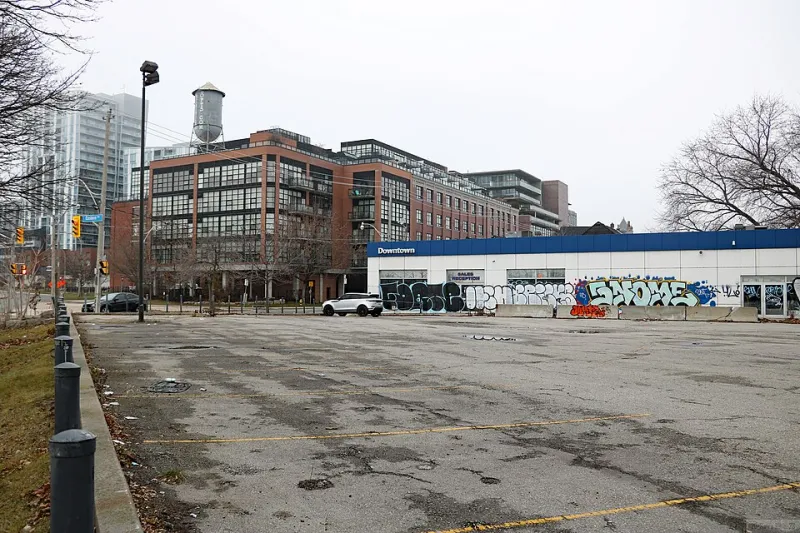
Photo: Can Pac Swire from Toronto, Canada, CC BY-SA 2.0, via Wikimedia Commons
Type v7081.com into a browser and what do you get? Maybe a placeholder. Maybe a redirect. Maybe a page that looks like someone had a good idea at 2 a.m. and then went to bed. That is the point. 7081 is not a word. It is not a brand promise, a lifestyle, or a vertical. It is four digits and a dot-com, an address that refuses to explain itself.
I love it for that.
The address bar used to be a dirt road
There was a stretch of internet history when a domain could be a notice board, a joke, a forwarding address, or nothing at all. You might land on a page that said UNDER CONSTRUCTION above a cartoon hard hat. You might get a parking page full of blue links for mortgage quotes. You might get redirected to someone's GeoCities shrine to their dog. The address did not have to match a business model. It just had to exist.
That era produced a specific kind of weirdness. Fan pages with three frames and a hit counter. Personal sites with a guestbook and a midi file. A domain registered by a guy in Ohio because he thought the letters looked cool together. None of it was optimized. None of it was monetized. A lot of it was ugly. But the bar for having a place on the web was lower, and the result was a web that felt less like a mall and more like a neighborhood with some vacant lots.
Now every address has to be a media company
By 2026, the pressure is different. A domain is expected to be a brand, a funnel, a content engine, a newsletter, a podcast, a TikTok account, and a reason to care. If a site does not have a clear value proposition, we treat it like a broken machine. We ask what it is for. We ask who it serves. We ask why it exists instead of letting it exist.
That is not just an internet problem. It is a culture problem. Everything, everywhere, all the time is a threat as much as a promise. When every empty space has to be filled with an opinion, a product, or a personal brand, the empty space starts to look suspicious. A number like 7081 does not pitch you anything. It does not pretend to be a lifestyle. It sits there like a vacant lot with a chain-link fence and a sign that says nothing.
There is a strange honesty in that. A meaningless address is not secretly selling you something. It is not building a funnel. It is not A/B testing your attention. It is just an address, which is all a URL was ever supposed to be.
The vacant lot is not a failure
I am not arguing that every website should be blank. I am arguing that not every website needs a mission statement. The placeholder page is a small monument to the idea that the internet can be provisional. It can be half-finished. It can be a forwarding address for a project you might get to later. It can be a number because numbers are cheap and words are exhausting.
We are writing this on a site named after four digits, which is either a punchline or a small act of resistance. Maybe both. V7081 does not have to be the next big thing. It can be a room with the lights on and the furniture still covered in sheets. That is a legitimate use of a room.
What we lost when the weirdness got organized
A lot of the old weird web moved into platforms, where it got a template and a terms-of-service agreement. The personal site became a profile. The guestbook became a comment section. The hit counter became analytics. The vacant lot became a landing page with a hero image and a call to action. Everything got easier to use and harder to stumble across.
I am not nostalgic for slow modems or broken frames. I am nostalgic for the idea that an address could be enough. You did not need a content strategy to deserve a corner of the web. You did not need a brand story to have a place. You just needed a name and a server and maybe a friend who knew HTML.
So here is to the meaningless address. Here is to the redirect that goes nowhere in particular. Here is to the number that does not mean anything, which is exactly why it means something to me.